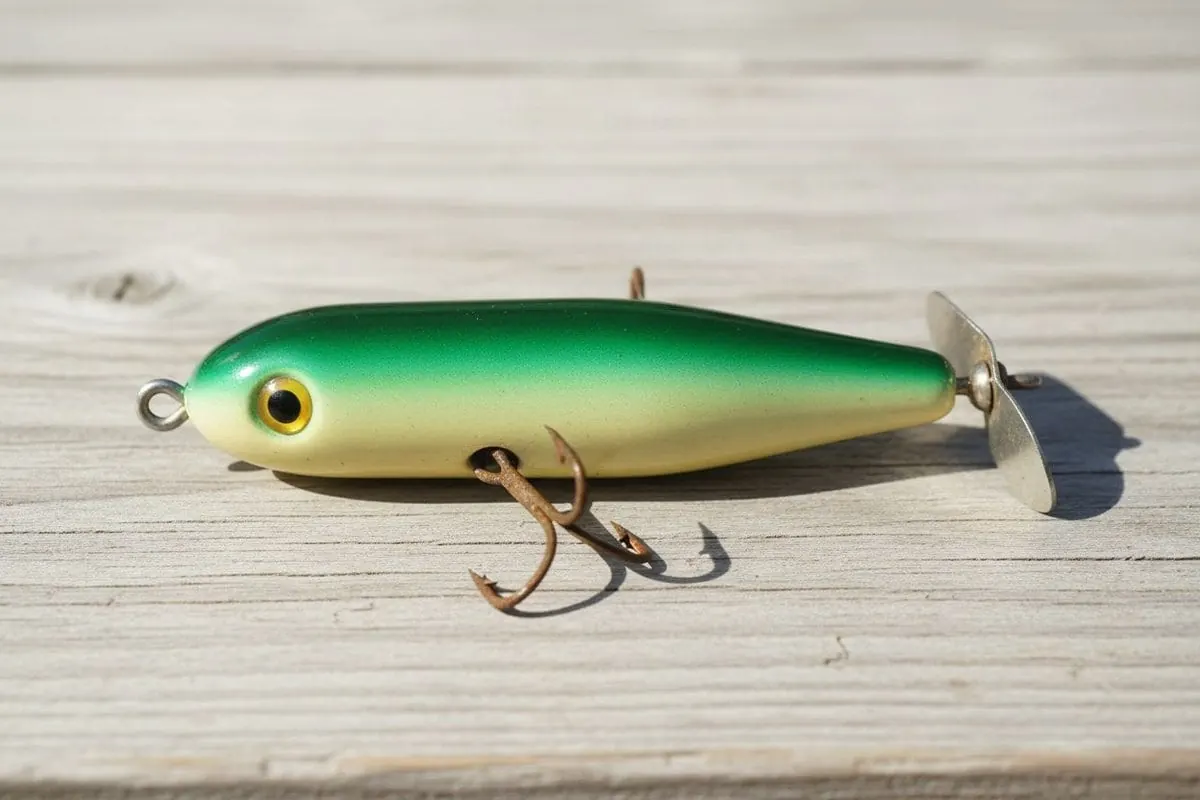
The Torpedo is a simple design: a tapered body, a propeller, a couple of trebles. Heddon has sold it for about a century in several sizes, and most of what turns up today is plastic and common. Name the size, then work out the age, then price it from real sales.
A prop bait in one paragraph
A prop bait is a floating lure with one or more small propellers that spin when the lure moves. Twitch it and the prop throws a spray of water; reel it steadily and the prop buzzes along the surface. The Torpedo is the best-known prop bait Heddon ever made. If yours has a lip under the chin or no propeller at all, it's a different lure, and fishing lure types explained will help you find the right family.
Where the Torpedo starts
According to Carl F. Luckey's Old Fishing Lures and Tackle, as listed on Wikipedia's Heddon page, Heddon cataloged two wooden Torpedoes from 1925: series 120, which ran until 1929, and series 130, which ran until 1939. Heddon had started making plastic lures in 1932, and the Torpedo continued in plastic. The same page notes the company was sold by the Heddon family in 1955 and is now part of EBSCO Industries, which still sells the Torpedo.
So a wooden Torpedo belongs to the early run, and that's where collector interest sits. Plastic Torpedoes cover most of a century, which is why there are so many of them.
Sizes
The sizes you will meet most, smallest to largest, are the Tiny Torpedo, Baby Torpedo and Torpedo. Retailers list the Tiny at 1 7/8 in and 1/4 oz. For the other two, the package or the retailer listing gives exact specs. To size an old one, measure the body only, nose to tail, without the propeller or hooks, and compare it with a current one.
| Model | Best for |
|---|---|
| Tiny Torpedo | Panfish, smallmouth, ponds, spinning gear |
| Baby Torpedo | Bass on light casting gear |
| Torpedo | Largemouth, open water, wind |
Size matters for value less than material. A wooden Torpedo of any size is a different category from a plastic one, so the age questions below are where the money is.
The old Torpedo checklist
Go down the list. The more boxes you tick in the left column, the more likely you're holding an early one.
| Check | Points to older | Points to newer |
|---|---|---|
| Body material | Wood: grain under chips, no seam, light for its size | Plastic: seam line along the body |
| Hook hardware | Different from a new Torpedo off the shelf | Same as a new one |
| Hooks | Dull, original style, matching wear | Bright modern hooks with split rings |
| Propeller | Darkened with the same age as the hardware | Bright, crisp, modern stamping |
| Paint | Even age wear, crazing on wood | Glossy modern finish, 3D or molded eyes |
Heddon's hardware changed several times over the decades, and the hardware sequence is how collectors date Heddon plastics in general. Lure Lore shows the two-piece flap rig, one-piece surface rig and surface cup on Heddon's River Runt, which is a useful visual reference when you're looking at the belly of a Torpedo.
One warning on hooks: replacement hooks are common on Torpedoes because people fished them hard. Replaced hooks don't make a lure newer, they make it less original, which lowers the value of anything wooden.
Pricing yours, step by step
We don't publish price ranges for Torpedoes. Prices depend on size, material, color and condition together, and only completed sales capture that. To land on a number for your lure:
- Name it precisely. Size, material and color: "Baby Torpedo, wood, frog finish" searches very differently from "Heddon lure."
- Search sold listings only. On eBay, turn on the Sold Items filter. Active listings show what sellers hope for, and old Torpedoes can sit unsold at hopeful prices for months.
- Match condition, not just model. Compare yours to sold examples with similar paint wear. Bright paint and half the paint gone are different lures for pricing.
- Check the prop. Bent, replaced or missing props take a wooden Torpedo down a step. Original props that spin freely are what buyers expect.
- Price the box separately. Find sold examples with and without a box. The gap is what your box is worth.
Three to five close matches are enough. If you can't find any, the lure is either unusual, which is good news, or misidentified, which is worth ruling out before you list it. The box rule from our guide to old lures worth money applies here as well.
Props: the part that breaks
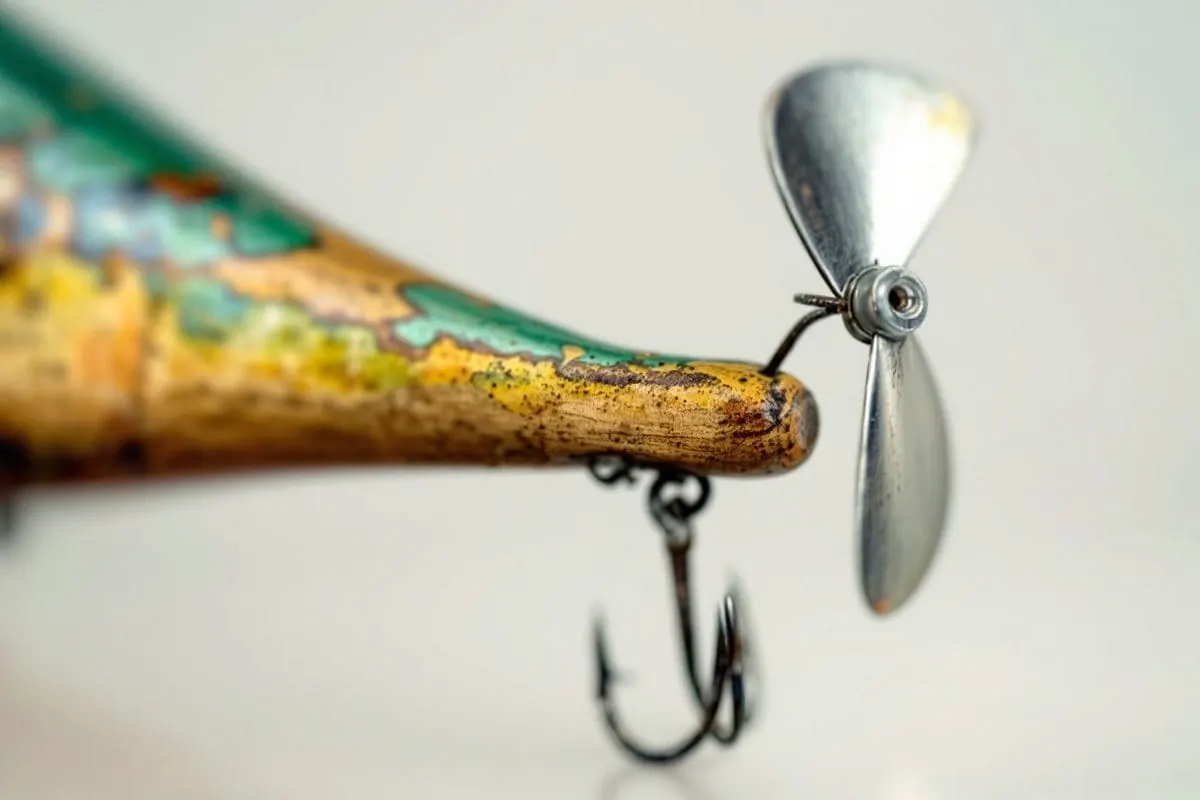
The propeller is the weak point of any prop bait. On old Torpedoes the blades get bent in tackle boxes, the shaft rusts, and the small washers that let the prop spin go missing. For a lure you fish, straighten a bent blade gently with your fingers and add a drop of oil to the shaft. For a wooden collectible, leave it: a bent original prop is better than one that's been worked back and forth, and a replacement prop is worse than either.
Also check whether the prop matches the lure. Props get swapped between lures over decades of tinkering. A prop that's much brighter or a different style than the other hardware on the same lure is a sign someone has been at it.
Don't confuse it with these
- Heddon Dying Flutter: another Heddon prop bait, with propellers at both ends.
- Smithwick Devil's Horse: a long, thin stickbait with propellers at both ends.
- Generic prop baits: many smaller brands made cigar-and-propeller lures. No markings plus odd hardware usually means a lookalike.
Why it's a good first Heddon to collect
If you want to start collecting Heddon without spending much, the Torpedo is a sensible entry point. Plastic examples are easy to find, so you can learn hardware, finishes and condition on lures that cost little. A run of sizes in one color makes a good-looking display. And because the Torpedo was made in wood first, there's a clear next step once you know what to look for: a wooden 120 or 130 series Torpedo with original props and paint.
How to fish one
The propeller does the work. Cast, wait for the ripples to die, then give a short twitch: the prop spits water and the nose dips. Pause. Twitch again. Bass often hit on the pause, sometimes after the lure has sat still for several seconds. A steady retrieve also works on active fish and buzzes the prop the whole way back.
The Tiny Torpedo is the pick for most people: small enough for bluegill and crappie, big enough for bass, and easy to cast on light line. Go up a size in wind or when bass are feeding on bigger baitfish. If you're thinking of fishing an old wooden one, don't. A new plastic Torpedo catches exactly as many fish.
Related reading
The Torpedo usually shares a tackle box with other Heddon topwaters. The Heddon Zara Spook guide covers the lure Heddon is most famous for, and the Heddon guide covers the brand as a whole.