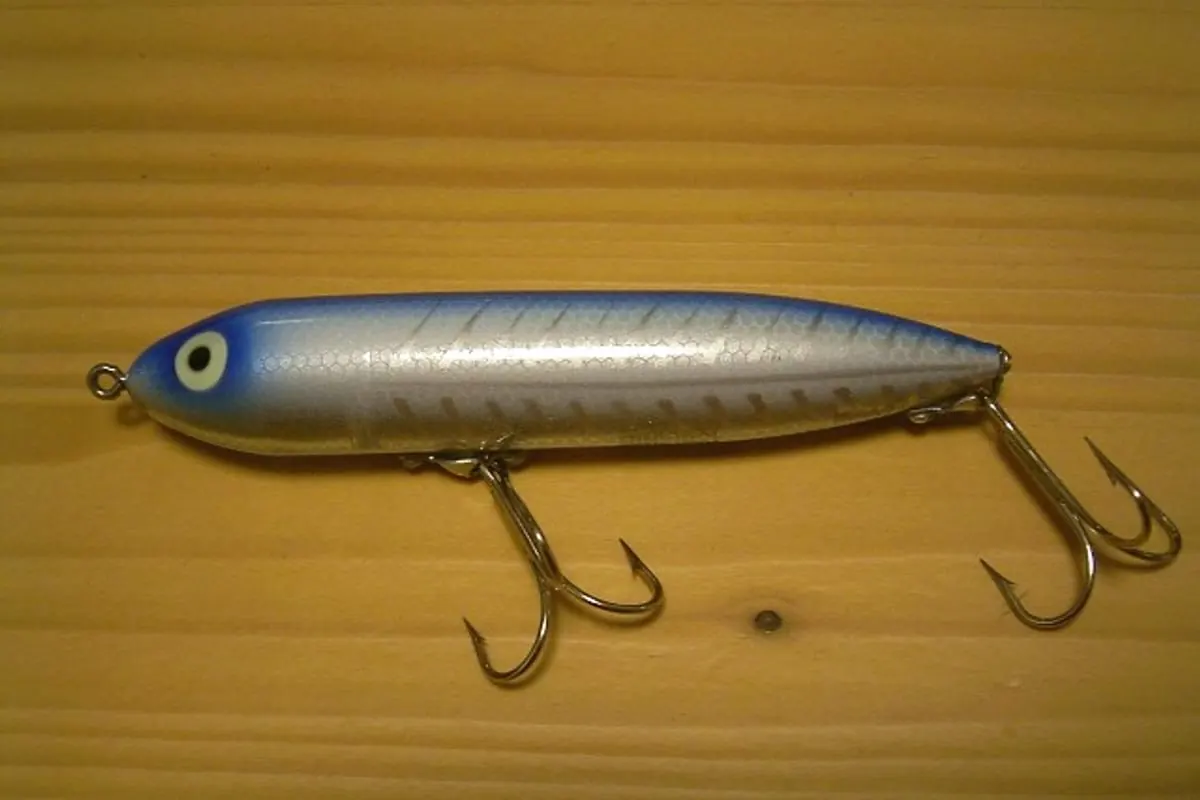
A Zara Spook in a tackle box is almost never rare. A Zaragossa is a different story. The difference is a switch from wood to plastic in 1939, plus a few hardware changes after that, and this guide shows you how to read them.
The timeline, with sources
These dates come from Carl F. Luckey's Old Fishing Lures and Tackle (6th edition), the standard collector reference, as cited on Wikipedia's Heddon and Zara Spook pages.
- 1902: James Heddon and his son Will start making lures commercially in Dowagiac, Michigan.
- 1922: the wooden Zaragossa, series 6500, enters the catalog. It stays until 1952.
- 1932: Heddon introduces its first plastic lures. They're called Spooks, and the early plastic mixtures were prone to decay.
- 1939: the plastic Zara Spook, series 9260, arrives. At Heddon, Spook in a model name means plastic.
- 1955: the Heddon family sells the company. It changes hands several times and ends up part of EBSCO Industries, which still sells the Zara Spook.
- Mid-1990s: a 4-inch, three-hook model is added, and later a smaller 2-inch version for light tackle.
Note the overlap: wooden Zaragossas and plastic Zara Spooks were both in the catalog from 1939 to 1952. A wooden body tells you it's a Zaragossa, not that it predates the plastic one.
Hardware is the best clock
Because the silhouette barely changed, collectors date plastic Zaras by how the hooks attach. The Zara Spook page cites this sequence from Luckey:
| Hook hardware | Period on the Zara Spook | What it looks like |
|---|---|---|
| Two-piece hardware | The first 1939 catalog Zara Spooks | Also called the flap rig: a plate with a separate hinged hanger |
| Surface hardware | 1940s and 1950s | A one-piece plate screwed flat to the body |
| Bell hardware, then molded hangers | Into the 1970s | Later fittings; compare against documented photos |
| Modern hangers and split rings | Recent production | What you see on a Zara bought new today |
The fastest practical check is to put your lure next to a new Zara Spook, or a photo of one, and compare the hardware. Anything different deserves a closer look. Our identification guide explains the hardware families in more detail, and Lure Lore has clear photos of the two-piece flap rig and one-piece surface rig on Heddon plastics.
The Spook family, side by side
People list these under the wrong name all the time, which matters both when you search for values and when you sell.
| Model | How to spot it | Collector interest |
|---|---|---|
| Zaragossa (6500) | Wooden body, no lip, no propellers | The collectible one |
| Zara Spook (9260) | Plastic, classic pencil shape, two hooks | Early hardware versions collected, recent ones common |
| Three-hook 4-inch Zara | Mid-1990s and later, three trebles | Fishing lure |
| Small Zara (2-inch) | Light-tackle version | Fishing lure |
| Super Spook family | Separate later models with their own names | Fishing lure |
Old or new: four checks
1. Is it wood?
Look at any chip in the paint. Bare wood shows grain; plastic is the same material all the way through and shows a thin seam running nose to tail. Wood also feels light for its size. A wooden body means Zaragossa.
2. What hardware?
Use the table above. Two-piece hardware on a plastic Zara puts it at the very start of the run, which is the plastic version collectors want.
3. Is the plastic healthy?
Wikipedia's Heddon page notes that the early plastic mixtures decayed and surviving examples are often distorted by bubbling. Warping, bubbles or cracks on an early Zara are signs of that breakdown. It affects value, and it affects storage: keep such a lure away from the rest of the collection.
4. Is the paint original?
Repainted Zaragossas exist because the originals are worth repainting. Look for paint over rust on the hardware, overspray inside screw eyes, or a finish that's too glossy for its age. A repaint drops a wooden Zara to a fraction of an original's value.
Condition grades and what they mean
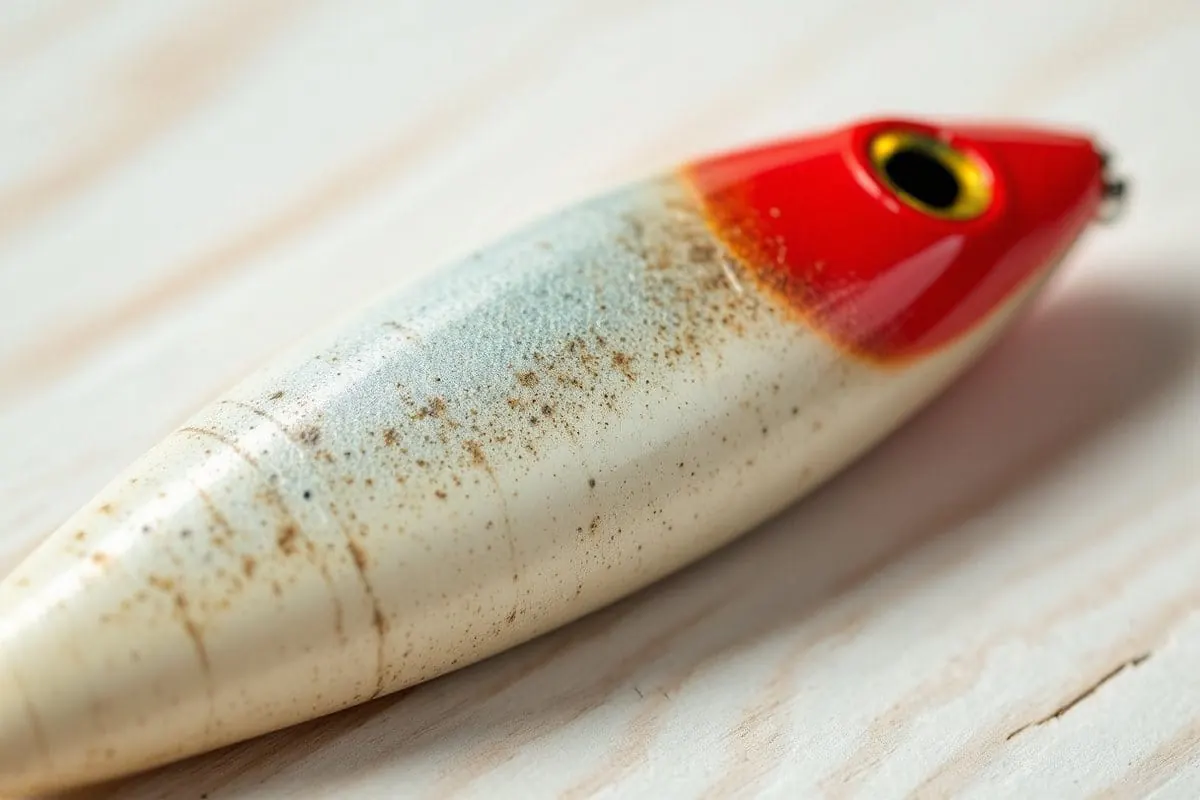
Collectors describe condition in a fairly standard set of words. Use them honestly when you sell and read them carefully when you buy, because the gap between grades is bigger than it sounds.
| Grade | What it means on a Zara |
|---|---|
| New in box | Never fished, box present and matching |
| Excellent | Bright paint, a few tiny marks, no hook rash |
| Very good | Light hook rash on the sides, eyes intact |
| Good | Paint loss at the nose and belly, honest wear |
| Fair or poor | Heavy paint loss, cracks, missing eyes |
Hook rash, the scratches left where the trebles swung against the body, is the most common flaw on any Zara because the lure is long and the hooks hang close to the paint. A little is expected on a fished lure. Deep gouges through to the body are not.
How to price yours
We don't print price ranges, because they go stale and hide the details that matter. Do this instead:
- Name it exactly: Zaragossa or Zara Spook, series number if you know it, hardware type, color.
- Search eBay with the Sold Items filter on. Ignore active listings, which show hopes, not prices.
- Keep only sold examples with the same hardware and a similar grade from the table above.
- If you have a box, find sold examples with and without one. The difference is what your box adds.
- For a wooden Zaragossa, get a second opinion. The National Fishing Lure Collectors Club is the main collector organization in the US, and its members are the buyers you want looking at it.
The Heddon guide covers the rest of the brand, and old fishing lures worth money explains why the box and color matter so much across all makers.
How to walk the dog
If yours is a fishing lure rather than a collectible, here's how to make it work. The Zara Spook has no lip and no blades. All the action comes from you.
- Cast and let it sit until the rings disappear.
- Point the rod tip down toward the water and leave a little slack in the line.
- Twitch the rod tip in short, even snaps, taking up a little line with each one.
- The lure swings left, then right, then left. That zigzag is walking the dog.
- When a fish hits, keep walking until you feel weight. Topwater strikes miss often, and a fish that misses will often come back.
The rhythm takes a few minutes to learn. Too much line tension and it just comes straight back; too little and it stalls. Use a loop knot or a split ring at the line tie so the nose can swing freely. A tight knot jammed against the eye kills the side to side action. Monofilament floats and helps the lure walk; braid casts farther, and many anglers add a short mono leader to get both.
Common mistakes when selling one
- Listing a Super Spook as a vintage Zara. Buyers know the difference and it kills trust in the rest of your listings.
- Calling a plastic Zara Spook a Zaragossa. Only the wooden ones carry that name.
- Cleaning or polishing before selling. Read about safe cleaning before you touch anything.
- Selling the box separately. The box and lure are worth more together than apart.
- Skipping the hardware photo. On a plastic Zara, the hardware is how a buyer dates it, so show the belly clearly.
For other Heddon topwaters that often show up in the same box, see the Heddon brand guide, and for the whole range of lure shapes, fishing lure types explained.