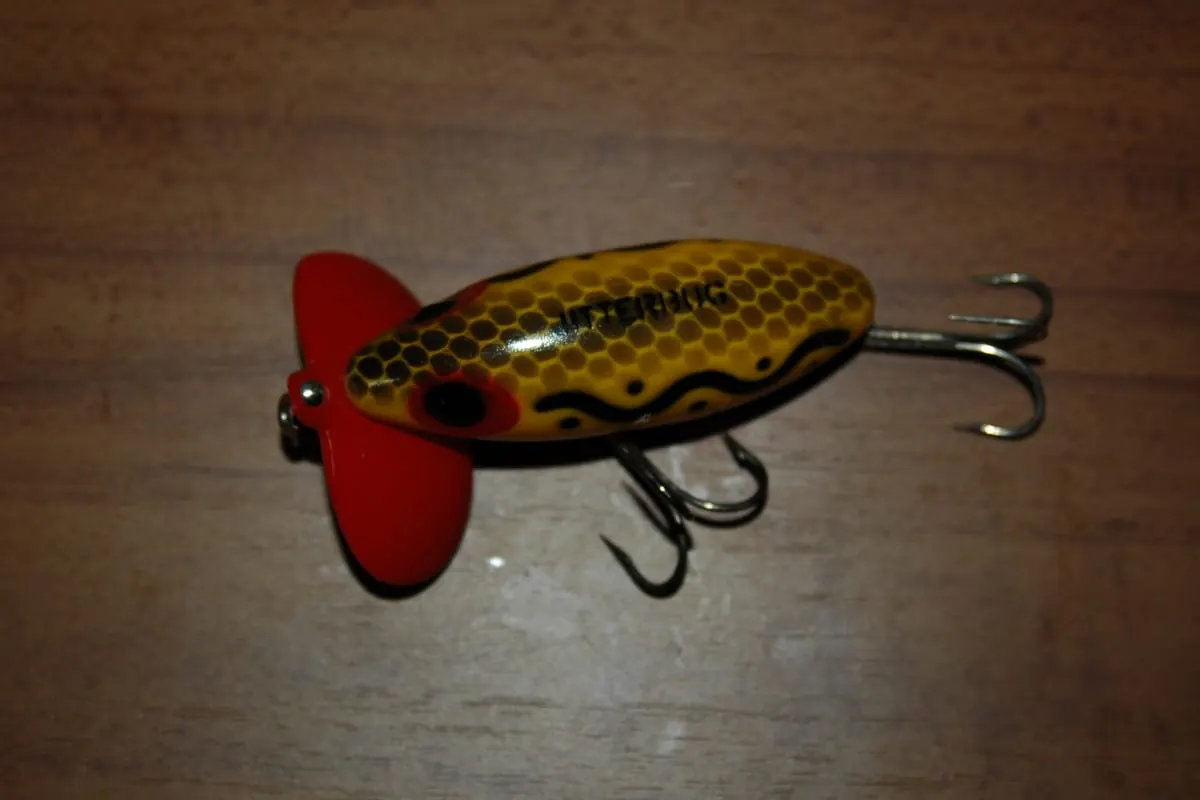
The short version: wood beats plastic, a plastic lip beats a metal one, and a box beats everything. The rest of this page is the detail behind that sentence, how to work out what your Jitterbug actually sells for, and which version to tie on if you plan to fish it.
Where the Jitterbug comes from
The Fred Arbogast Co. started in Akron, Ohio. According to the company history on USLures, Arbogast's first commercial hit was the Tin Liz around 1930, and the Jitterbug followed in 1938. Fred Arbogast died in 1947, the company kept adding models, and the Akron factory stayed open until 1997, when the business was sold to PRADCO. Some sources give 1939 for the first Jitterbugs on the market, so treat the launch as late 1930s.
Lurenet, the PRADCO store that sells Arbogast today, tells the material story in its post on classic topwaters: the first Jitterbugs were wood with a metal lip, a plastic version arrived in 1941, and during the war the lure used a plastic lip and tin hook hangers because aluminum was short. That sequence is what collectors use to sort Jitterbugs today.
Date your Jitterbug in 30 seconds
Three features do almost all the work. Look at them in this order.
| What you see | What it means |
|---|---|
| Wooden body, metal lip | The original prewar version |
| Plastic lip, tin hook hangers | World War II production, made during the aluminum shortage |
| Plastic body, metal lip, older hooks and hardware | Postwar production, the long middle of the lure's run |
| Plastic body, bright modern finish, new hooks | Recent production, sold new today |
Telling wood from plastic is the step people get wrong. Wood is lighter than you expect for its size, and where the paint has chipped you see grain. Plastic shows a faint seam line running nose to tail where the two halves of the mold met. If you can't decide, our guide to antique wooden lures has five tests that settle it.
The three versions collectors care about
Wood with a metal lip
The first Jitterbugs. These are the ones a serious collector wants in a display case. Paint wear is expected. Repaints are not, and they are common, so look for crisp edges where colors meet and for paint sitting on top of rust on the hardware.
The wartime plastic lip
The most recognizable collector variant. Plastic lips were more fragile than metal ones, so cracked or chipped examples are normal, and an intact lip is what buyers look for first. The tin hook hangers that went with them are the second tell. If you find a plastic-lip Jitterbug, set it apart from the rest of the box.
Plastic bodies, and why most Jitterbugs are common
Once the plastic body arrived, the Jitterbug stayed in production for decades. That's the problem for value: a lure made for that long exists in enormous numbers, and many are still being fished. A plastic Jitterbug in a common color is a fishing lure first and a collectible a distant second.
How to find what yours is worth
We don't publish price lists, because a Jitterbug's price depends on details a list can't see. The reliable number comes from completed sales of lures like yours. Here's the method:
- Name it precisely: material of the body, material of the lip, size, color. "Arbogast Jitterbug plastic lip, black" finds very different results from "old Jitterbug".
- Search sold listings only. On eBay, turn on the Sold Items filter. Asking prices on Jitterbugs run far above what buyers pay.
- Match condition, not just model. Compare against sold examples with similar paint wear and an intact or damaged lip.
- Price the box separately. Find sold examples with and without a box. The gap is what your box adds.
- Use three to five matches. One sale is an anecdote. A handful is a price.
And these are the factors that move the price, from most to least:
| Factor | What helps | What hurts |
|---|---|---|
| Body material | Wood | Plastic, especially recent |
| Lip | Wartime plastic lip, intact | Bent, cracked or replaced lip |
| Paint | Original, bright, light wear | Repaint, heavy loss, clear coat |
| Color | Uncommon factory colors | Common colors made in volume |
| Hooks and hangers | Original to the lure | Replaced with modern hooks |
| Packaging | Original box or card that matches | No box, or a box from another lure |
The box point is the same one made in our guide to old lures worth money: never throw out a box because it looks tattered.
What the lip can and can't tell you
People expect the stamping on the lip to date the lure. It helps less than you'd hope, because the maker's name appears on Jitterbug lips across a long stretch of production. A stamp proves it's an Arbogast, not that it's old. What the lip does tell you:
- Material. Plastic is the wartime tell. That's the single most useful fact the lip carries.
- Condition. A lip bent flat, cracked or missing hurts an old Jitterbug badly, because the lip is the whole point of the lure.
- Originality. A bright, clean lip on a body with heavily worn paint can mean a replacement. Wear on the lip and wear on the body should roughly agree.
Don't try to bend a lip back into shape on an old Jitterbug. Old metal can crack at the fold, plastic lips snap, and the screws holding a lip go into wood that may split.
How to list one so it sells
Buyers search for specific words. Put them in the title in this order: maker, model, material, variant, color, condition. Compare:
| Weak title | Strong title |
|---|---|
| Old fishing lure vintage antique | Arbogast Jitterbug wood body, metal lip, frog finish |
| Jitterbug lure lot rare | Arbogast Jitterbug WWII plastic lip, black |
| Vintage topwater bait | Musky Jitterbug plastic, original hooks, in box |
Then photograph the lip from the front, the belly with the hook hangers, and any chip that shows the body material. Those three photos answer the questions a collector would otherwise message you about.
Sizes, if you're going to fish it
The Jitterbug has been sold in several sizes, from small light-tackle versions up to the Musky Jitterbug. Check the package or the retailer's listing for the exact weight. In practice:
- Small sizes: ponds, panfish water and spinning gear. Bass still eat them.
- Standard size: the one most people mean when they say Jitterbug. Bass on casting gear.
- Musky size: pike and musky. Heavy line and a heavy rod.
The retrieve is the easy part. Cast it, let the rings settle, then reel slowly and steadily so the lip catches water and the lure rocks side to side with a gurgle. Speed up and it skates instead of working. Wait until you feel the weight before setting the hook; topwater strikes are often missed by reacting to the splash.
Should you fish an old wooden one? No. Hooks rust, paint chips on rocks, and one pike can strip a finish. A new Jitterbug costs little and catches the same fish.
Jitterbug or something else?
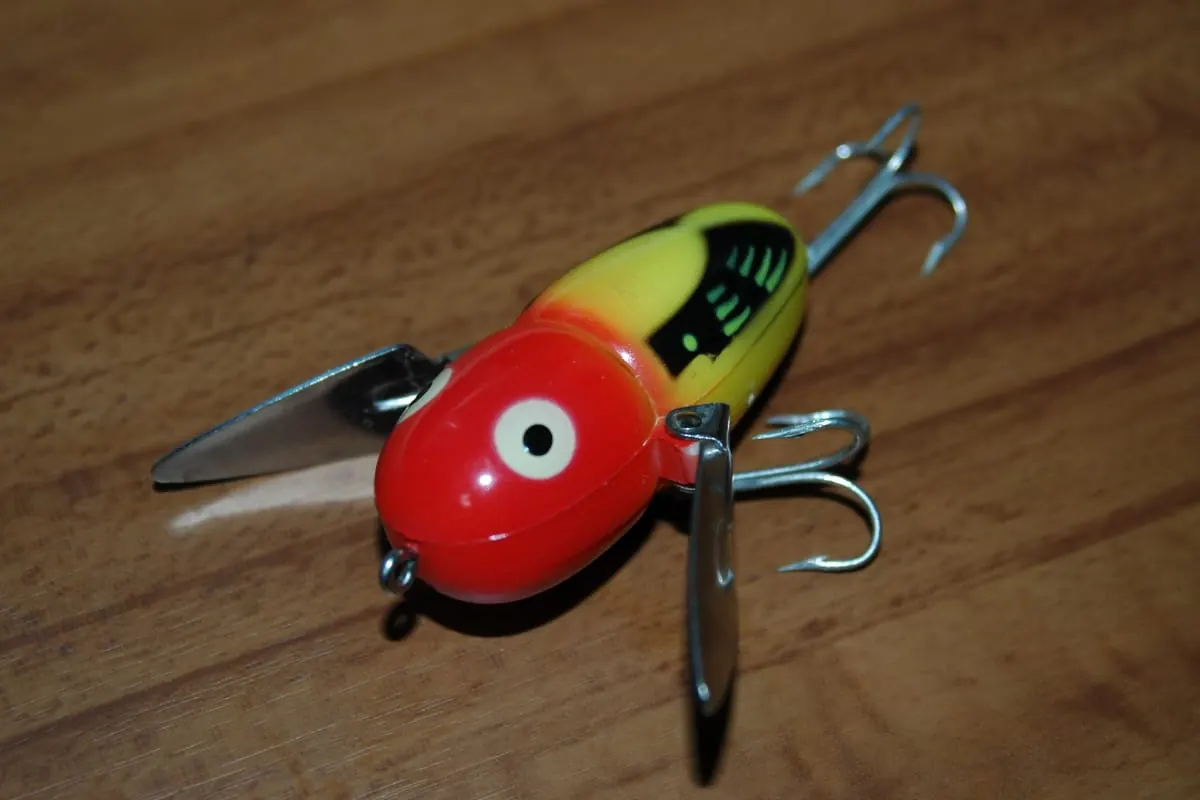
Three topwaters get confused with each other in old tackle boxes. The quickest way to tell them apart:
| Lure | Maker | The giveaway |
|---|---|---|
| Jitterbug | Arbogast | One wide metal lip across the face |
| Hula Popper | Arbogast | Hollow cupped mouth and a skirt at the tail |
| Crazy Crawler | Heddon | Two metal wings on the sides instead of a lip |
If yours has a cupped face and a rubber skirt, see our Hula Popper guide. The Crazy Crawler is the closest in action and the most common mixup. For the other families of lures you might find next to a Jitterbug, see fishing lure types explained.
Before you sell or toss a box of Jitterbugs
- Separate wooden bodies from plastic ones.
- Pull out anything with a plastic lip and check the hangers.
- Match boxes to lures if you have them, and keep them together.
- Don't clean, repaint or replace hooks. Original condition is worth more than shiny.
- Price against sold listings, and sell the good ones individually. Lots are where valuable lures go to be underpriced.
If the same box has older wooden plugs from other makers, the six-step identification guide works for any brand, and the Heddon guide covers the maker most likely to be sitting next to your Jitterbug.